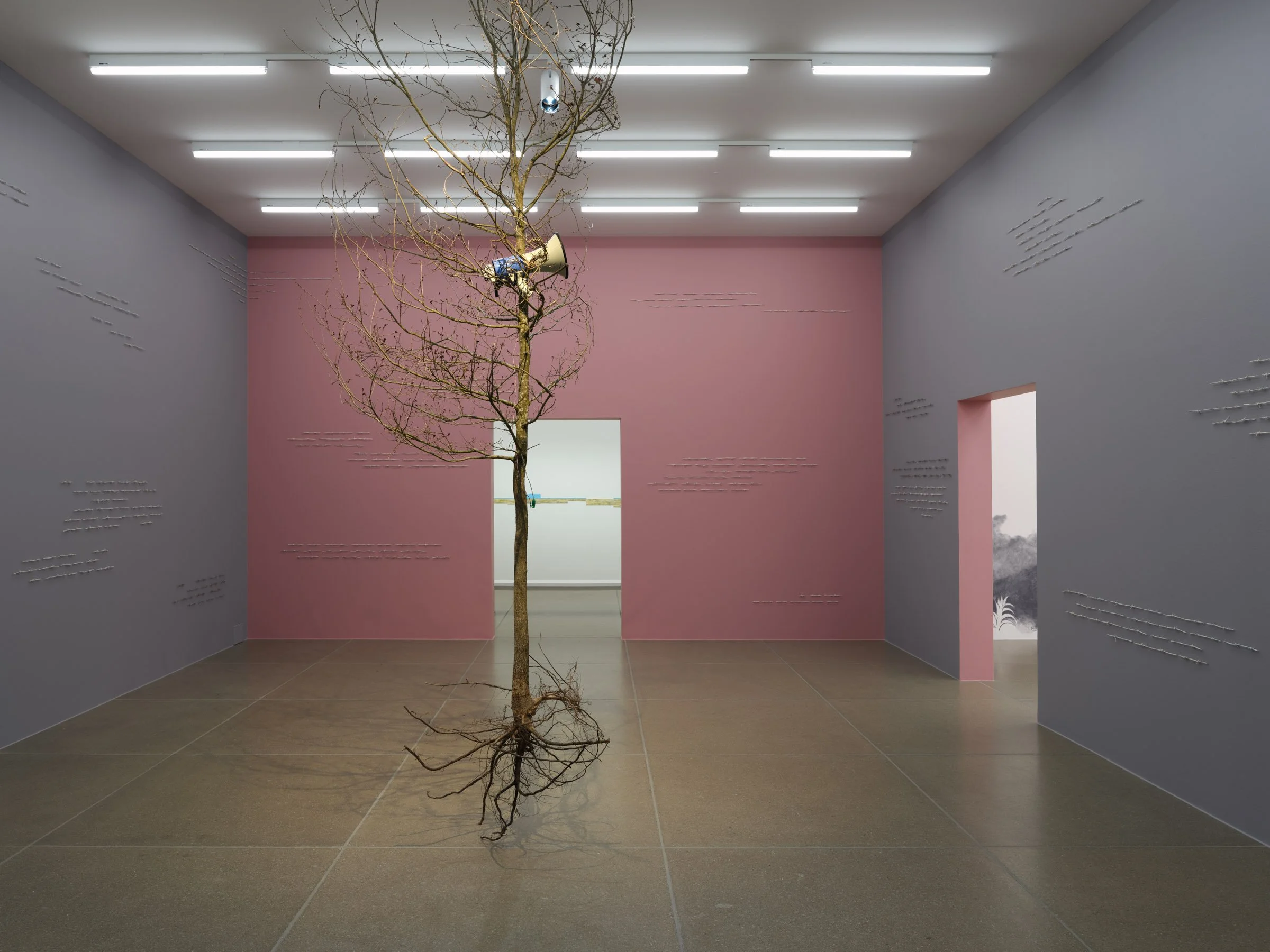
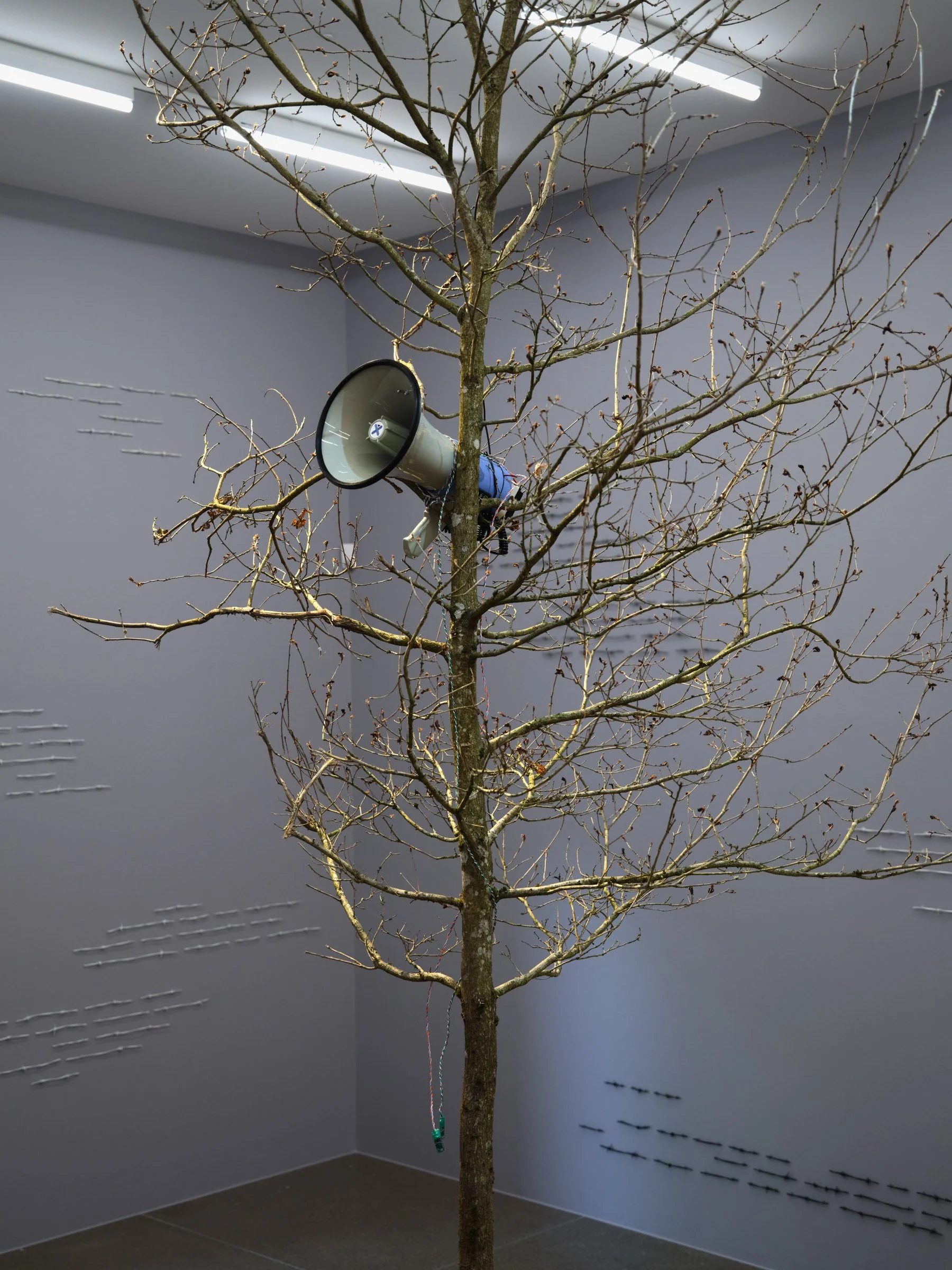
Medium: Dead Oak tree, megaphone, audio, sensor I Size: variable dimensions 2025, wood, megaphone, audio, sensor, variable dimensions
The work asks what makes something foreign or alien. Is foreignness a condition of origin, or is it produced by systems of power? Borders, nation-states, patriarchal traditions, and colonial classifications decide which bodies, plants, languages, and voices are allowed to belong. The oak, native to the Swiss landscape in which the work is presented, becomes more than a tree: it becomes a listening body, , a witness, and a host for voices that have travelled across borders. Placed inside the oak, the megaphone evokes the language of protest marches, public assemblies, and collective demands. Yet once the song passes through the tree, the distinction between native and foreign begins to merge. Collaboration is central to my practice because it creates a collective understanding of resistance. The work was conceived through collaboration with the Iranian musician Hura Mirshekari, who lives in exile in Paris. Upon my invitation, she composed and sang in Sistani, a Persian dialect rarely spoken today. By singing in a tradition usually reserved for men in her culture, her voice carries both personal and collective resistance. Her refrain—“These hard nights will not end”—moves through grief, endurance, and defiance. As the song. unfolds, her voice is joined by the Bulgarian singers Viktor Benev and Bilyana Furnadzhieva, creating a polyphonic structure in which different cultural histories coexist without becoming one.